UKAEA has completed a programme of industry‑led projects that are delivering significant advances in fusion maintenance, inspection and robotic technologies. This strengthens the UK’s capability to support the delivery and operation of future fusion power plants.
The Fusion Futures Industry Capability Programme supported the project delivery through UKAEA’s Remote Applications in Challenging Environments (RACE) centre.
The projects addressed key challenges in fusion power plant operability. This involved enabling remote inspection, repair and maintenance in environments characterised by:
- radiation
- magnetic fields
- restricted access
- extreme materials requirements
Delivering capability across key fusion challenges
Working with a wide range of UK industrial partners, the projects delivered progress across three priority areas critical to future fusion operations.
Fusion pipe maintenance
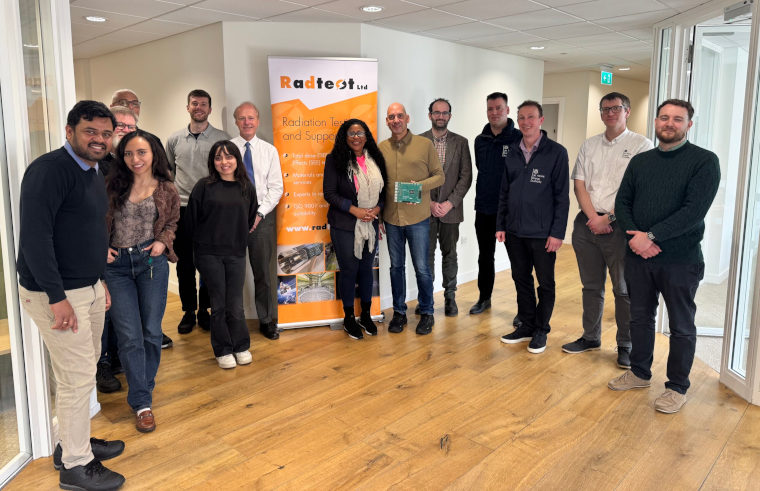
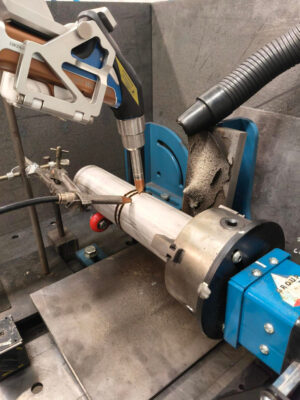
M5tec Ltd, RED Engineering and The Welding Institute delivered the fusion pipe maintenance projects. These demonstrated remotely deployed tools for cutting, aligning, clamping and welding pipework in constrained environments. This included advances in mechanical pipe connections, laser cutting and rewelding techniques and improved understanding of welding limitations in fusion‑relevant magnetic fields.
Fusion‑oriented robotic technology
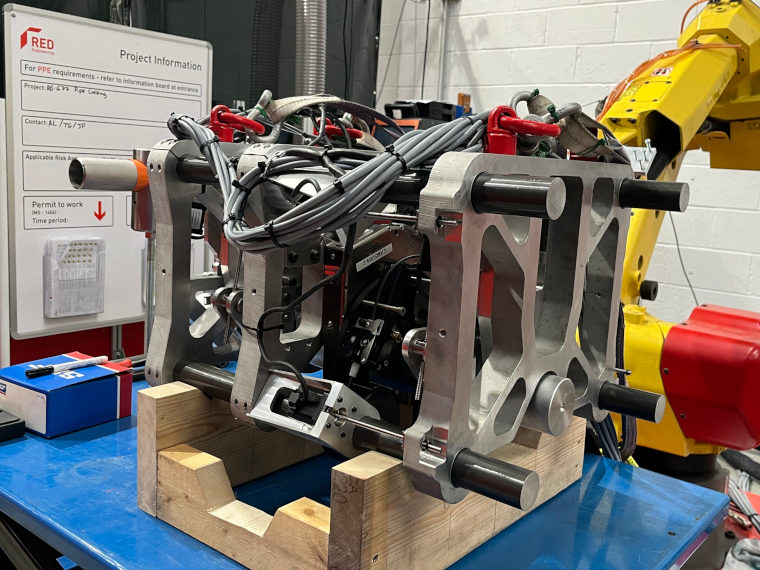
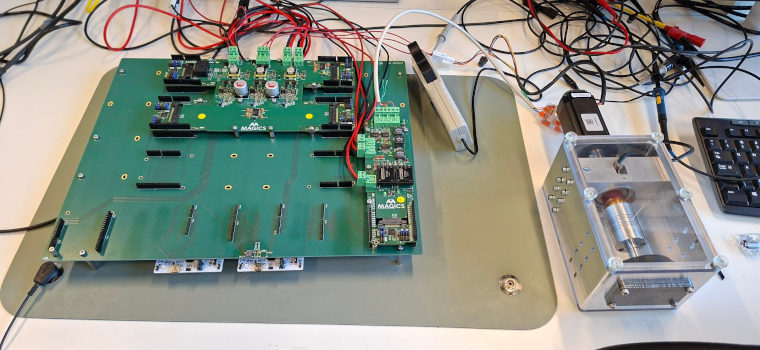
Magics Technologies NV, Oxford Sigma, Radtest Ltd and Veolia Nuclear Solutions Ltd delivered the fusion‑oriented robotic technology projects. This included advanced fusion‑tolerant motors, sensors, electronics, communications and machine‑vision systems. The programme also delivered the first coherent, evidence‑based qualification framework for robotic systems intended for fusion environments. This supports future deployment and confidence in safety and reliability.
In‑vessel inspection and repair
In‑vessel inspection and repair projects brought together Forg3D, Laser Additive Solutions Ltd, PyrOptik, StirLight, The Welding Institute and WAAM3D. They advanced inspection, additive manufacturing and repair of plasma‑facing and structural components, particularly tungsten. Work included stereoscopic and hyperspectral inspection, non‑destructive testing techniques, and multiple additive manufacturing processes suitable for robotic, in‑vessel deployment.
Strengthening the UK fusion supply chain
Together, the projects represent a collaborative effort across UK-based industry. They brought together expertise in robotics, welding, additive manufacturing, inspection and radiation‑tolerant technologies into fusion‑relevant applications. The programme has converted public investment into demonstrable capability, strengthening the UK fusion supply chain and reducing delivery risk for future fusion facilities.
Nick Sykes, Director of RACE at UKAEA, said:
Collaboration with UK-based industry is essential to deliver the complex technologies required for future fusion power plants. These projects have delivered tangible advances while strengthening the UK supply chain, helping ensure we are ready to meet the challenges of commercial fusion energy.