Our mission is to lead the delivery of sustainable fusion energy to maximise scientific and UK economic benefit.
Fusion offers the promise of large-scale, low-carbon energy to meet rising demand, enhance resilience against climate change and safeguard energy security.
Fusion energy is tipped to be a multi-trillion-pound global industry in the second half of the century. Getting there involves a set of technical challenges, which span specialist science, novel manufacturing, integrated design and large-scale infrastructure.
Our strategy for 2026 to 2030 builds on the UK government’s fusion strategy and supports the strategy of UKAEA Group’s subsidiary company, UK Fusion Energy Ltd . It includes:
- supporting UK Fusion Energy Ltd to complete a detailed design of the STEP Fusion prototype power plant
- increasing the number of UK companies delivering fusion products and services around the world
- completing new internationally leading research facilities at Culham Campus in Oxfordshire
- growing a new generation of fusion scientists, engineers, and technical experts
Strategic goals
As the UK’s national fusion laboratory, we deliver foundational research, technology and innovation in support of the UK fusion sector through world-leading fusion energy expertise and capability. Our strategic goals are:
Solving problems
Solve challenges of sustainable fusion energy – from design through to decommissioning – with world-leading science and engineering.

Product
Develop technologies for fusion power plant and adjacent sectors.
Prosperity
Enable a thriving UK fusion industry that exports fusion technology around the world.

Place
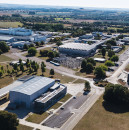
Grow clusters that accelerate innovation in fusion and related technologies.
People
Nurture the talented, diverse people needed to deliver fusion energy.

Power plant
Design, deliver and operate fusion power plant. This is a strategic goal for UK Fusion Energy.
The 4 challenges of fusion energy
We think there are 4 interrelated challenges which apply to mainstream approaches seeking to deploy fusion energy.
Effective fusion core
How to deliver sufficient power from the fusion core, in the face of plasma and materials challenges, to allow adequate exported power.
Fuel self-sufficiency
How to operate the tritium fuel cycle without requiring a sustained external supply of tritium.
Integration
How to manage the physical and performance interfaces of the many diverse components and systems in the face of uncertainties that in many cases are significant and potentially unquantifiable.
Affordability and attractiveness
How to ensure that the solutions to all the other challenges enable a realistically deployable fusion power plant.
Meeting the challenges of fusion energy
UKAEA has expertise enabling core technical activities meeting the challenges of fusion energy:
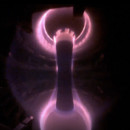
Plasma
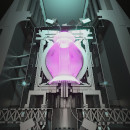
Understanding and simulating numerically the fundamental behaviours of confined plasmas and the factors affecting the design, achievement and control of plasmas in fusion power plants.
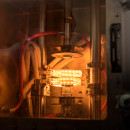
Fuel cycle
Understanding tritium behaviour and developing ex-vessel tritium handling systems and the tritium plant.
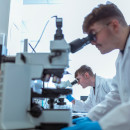
Materials
Developing materials knowledge and solutions necessary to understand fusion materials and how to use them in principle in multi-material components able to withstand fusion conditions, and how to use neutron-materials reactions to breed new tritium fuel.
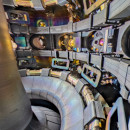
Fusion technologies
Including high-temperature superconducting magnets, component qualification tools and neutronics and thermal hydraulics technologies.
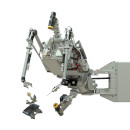
Robotics
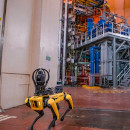
Specifically, automated and autonomous remote operations and maintenance.
Advanced computing
A critical ‘technical enabler’ in each of the challenges.

Fusion-relevant engineering
An engineering, design and delivery capability, combined with specialist infrastructure and understanding of relevant codes and standards.
Our 4 strategic themes
We have 4 ‘themes’ of activity within our strategy to frame the scientific and economic benefits that can be achieved.
International
Fusion energy research is a global endeavour, and collaboration is at its core. We work with laboratories, universities, and research organisations across Europe, North America, and Asia – sharing knowledge, pooling resources, and making faster progress together.
Research
Our scientists and engineers are world leaders in their fields, working alongside UK universities and international partners to advance our understanding of fusion energy. We support doctoral training, joint research projects, and academic partnerships, with ambitions to grow this work further in the years ahead.
Commercialisation
Fusion energy research generates ideas and technologies with real commercial value. We actively develop these through our innovation pipeline – turning scientific advances into spin-out companies, licences, and commercial partnerships that benefit the UK economy.
Industry
We are helping to build a thriving UK fusion supply chain by working with businesses to develop the skills and technologies the sector will need. Through programmes like Fusion Futures and the Fusion Industry Programme, we have engaged with nearly 150 companies – including more than 30 new to fusion energy.
Our expertise, work and facilities
The delivery of the technical outcomes of our strategy for 2030 are enabled by core expertise, programmes of work and anchor facilities.
| Expertise | Main programmes of work | Anchor facilities |
|---|---|---|
| Plasma | UKRI research, STEP (fusion partner) | MAST Upgrade |
| Fuel cycle | UKRI research and grants (for example the ASTRIA project), STEP (fusion partner), JDR and Waste Innovation | H3AT Tritium Loop (under development), Active Tritium R&D Lab facility, Material Detritiation Facility |
| Materials | UKRI research and other research grants, LIBRTI fusion fuel capability programme, STEP (fusion partner) | Materials Research Facility, LIBRTI (under development) |
| Robotics | JDR and Waste Innovation, STEP (fusion partner), ESS Active Cells Facility, LongOps (with TEPCO Japan), UKRI research and other research grants | RACE (Culham Campus), RAICo1 (Whitehaven) |
| Fusion Technology | UKRI research and other research grants, STEP (fusion partner) | Fusion Technology Facility, including ELSA, HIVE and HHF Laser |
Flagship targets for 2030
We have a small sub-set of activities from across UKAEA’s portfolio which are ‘flagship targets’. These serve to demonstrate the range of tangible near-term scientific and economic benefits associated with our work on fusion energy.
May 2026
Commercialise UKAEA-developed tritium technology by partnering with industry.
September 2026
Deliver the government’s first AI Growth Zone (AIGZ) at Culham, beginning operations of Sunrise, expected to be the most powerful fusion-dedicated AI supercomputer in the world.
July 2027
Accelerate the fusion skills base through the FOSTER programme, reaching the point at which – since 2024 – UKAEA will have supported 2,000 more apprenticeships, graduates, PhDs and other fusion training opportunities undertaken across the UK in fusion-relevant disciplines.
December 2027
Commercialise UKAEA-developed robotics capabilities for application into global fission, fusion, clean energy and other technology markets.
March 2028
Build the globally unique LIBRTI facility, demonstrating Multiphysics Platform to predict LIBRTI tritium output (by July 2027) and completing LIBRTI building at Culham Campus to begin installation of neutron source (by March 2028).
June 2028
Develop fusion physics knowledge with MAST Upgrade, completing the fifth and sixth MAST Upgrade experimental campaigns to provide experimental results which increase the confidence in the confinement and current drive scenarios required for the delivery of STEP and spherical tokamak fusion power plants.
Your views
Progress towards fusion energy needs a broad community of expertise. We value your insights to build a thriving UK fusion energy ecosystem.
Stay updated
Sign up for updates on our progress towards fusion energy including our work, expertise, services, commercial opportunities, news and events.