As industries increasingly rely on robotics to operate in hazardous, remote and inaccessible environments, experts from fusion, nuclear, defence, maritime, space and robotics sectors gathered at Harwell Campus to explore shared challenges and emerging opportunities. The UK Atomic Energy Authority (UKAEA) joined organisations from industry, academia and government at the Robotics for Extreme Environments event on 22 September, examining how technologies developed for some of the world’s most demanding settings can support future applications across multiple sectors, including space.
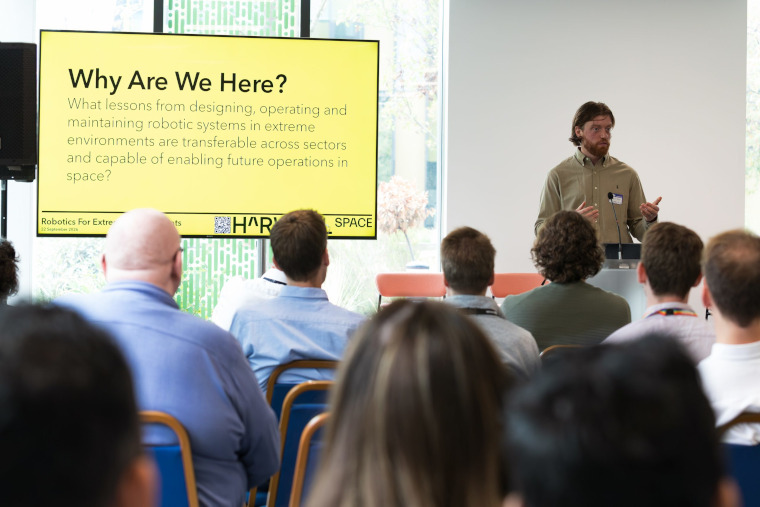
Organised by the Harwell Space Cluster, the Science and Technology Facilities Council (STFC), the UK Beyond Earth Network (UK BEN), UK Autonomous and Connected Earth (UK ACE) and the Satellite Applications Catapult, the event brought together specialists to discuss how robotics can support the operation, maintenance and resilience of critical infrastructure in environments where direct human intervention is difficult or impossible. A central theme was the growing opportunity for technology transfer between sectors that have traditionally operated independently but increasingly face similar technical challenges.
Shared challenges, shared solutions
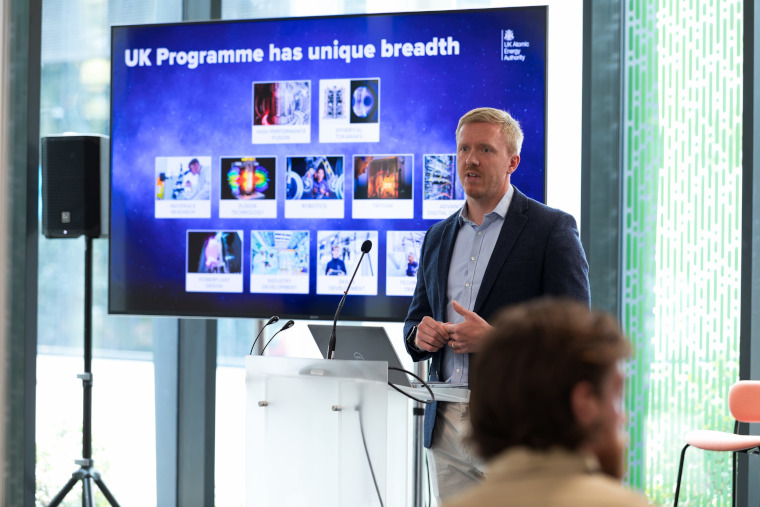
Representing UKAEA’s centre for Remote Applications in Challenging Environments (RACE), Dan Law, Head of Operations, delivered the keynote presentation, sharing lessons learned from designing, operating and maintaining robotic systems in fusion and nuclear environments. Drawing on more than 15 years of experience in robotics, remote handling and nuclear engineering, he highlighted how challenges such as remote inspection, maintenance, infrastructure resilience and operation in inaccessible environments are now common across multiple industries. He also emphasised the value of virtual environments and digital mock ups in preparing operators and testing systems before deployment. These insights build on UKAEA’s extensive experience at the Joint European Torus (JET), including over 30,000 hours of in vessel remote operations.
Discussions throughout the day demonstrated that solutions developed for fusion and nuclear applications have relevance far beyond their original use cases, creating opportunities for collaboration across a wider technology ecosystem. Ashley Tuton‑Brayshaw, Space Programme Coordinator at Harwell Space Cluster, noted that one of the event’s key aims was to connect communities that do not traditionally interact, encouraging new thinking around robotics, autonomy and future space operations.
Building the bridge from Earth to space
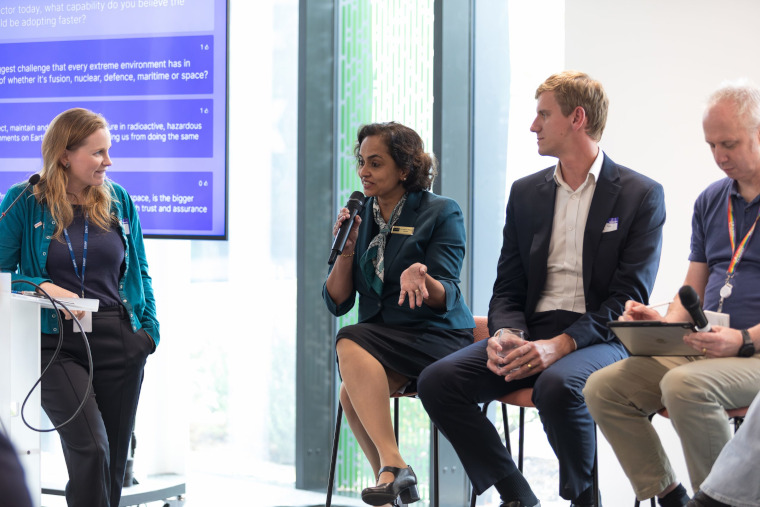
UKAEA also contributed to a panel exploring Earth to Space technology transfer, examining how established terrestrial robotics capabilities could support future space infrastructure. Discussions highlighted the increasing importance of robotic systems as industries seek to operate safely and efficiently in environments where direct human intervention is difficult, costly or impossible. Simon Tate, Head of Programme Development within RACE, joined experts to discuss which technologies are most ready to enable operations beyond Earth, including in orbit servicing, in space manufacturing and tele operation. Discussions also explored how expertise developed for fusion maintenance and remote handling could help address the challenges of operating critical infrastructure beyond Earth.
Robotics in action
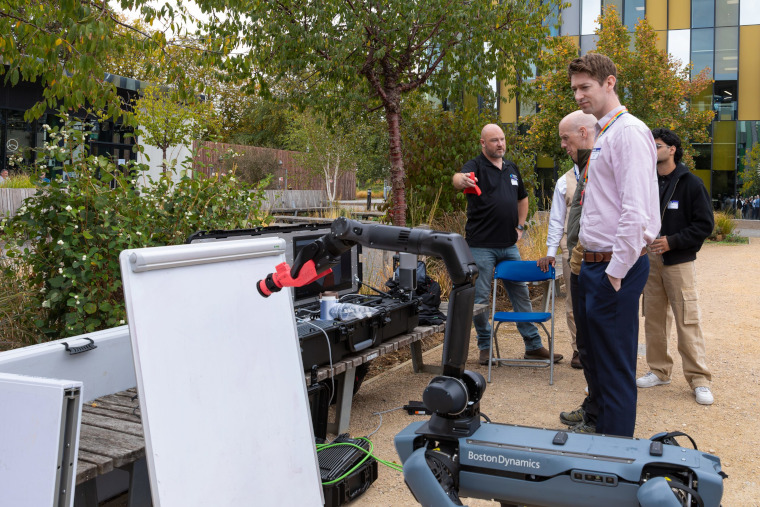
Alongside the conference programme, UKAEA showcased a live demonstration of a Health Physics contamination‑monitoring tool developed through the Robotics and AI Collaboration (RAICo) for deployment on Boston Dynamics’ Spot robot. Attendees were able to experience remote operation using a haptic controller and explore how robotics can undertake tasks in hazardous or inaccessible environments.
Creating opportunities for future collaboration
The event highlighted a growing recognition that many sectors are working to solve similar problems, from inspection and maintenance to autonomy and resilience. It also demonstrated how expertise developed for fusion can unlock new opportunities across the wider economy, accelerating innovation and reducing duplication. Building on this momentum, organisers are planning a follow on event focused on autonomy, connectivity and intelligent systems, continuing the conversation around how robotics can enable safe and effective operations in increasingly complex environments on Earth and beyond.