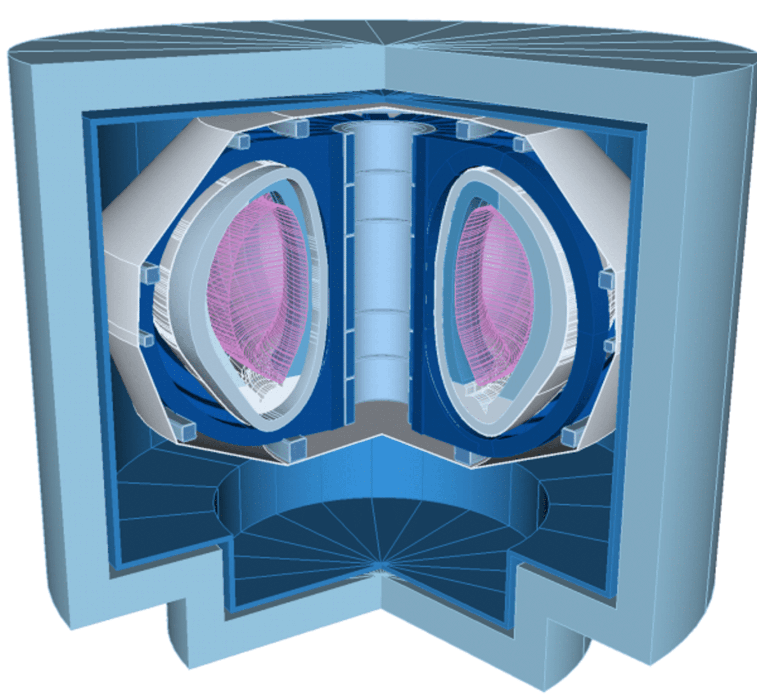
At RACE, UKAEA’s centre for Remote Applications in Challenging Environments, one of our maxims is ‘device defining, mission critical.’ This means that the robotics systems and processes we design for fusion power plants directly influence their architectures and commercial viability.
Designing future fusion power plants can be a mind-bending balancing act. You constantly make trade-offs between plasma physics, material properties, magnet positions and remotely operated, probably autonomous, machines for maintenance and upgrades.
RACE is leading the development of remote maintenance technologies to maintain the world’s fusion machines. These include JET, ITER, STEP and DEMO. In our experience, getting remote maintenance systems designed into tokamaks as early as possible is critical. It will ensure plants operate as efficiently as possible.
Increasingly, the engineering industry is looking to artificial intelligence (AI) and machine learning tools to help us design systems quicker and better. Nikola Petkov, Senior Robotics Research Engineer in RACE’s research team, is currently tackling the first of ‘RACE’s 10 challenges of fusion energy’ – optimising architectures for remote maintenance – by creating an AI tool.
Nikola explains:
The design process of a fusion power plant is iterative, and at the moment an iteration can take up to two years. During one design iteration, a remote maintenance system is being designed in parallel and we exchange information between the two design processes. The flow of information is usually very slow and often engineers settle on a design route without realising that later it will have problems integrating into the fusion machine.
Baseline fusion machines are currently designed with codes called PROCESS and Bluemira that have been developed at UKAEA. These use optimisation techniques to give simplistic tokamak designs in timeframes reduced from months to minutes.My task is designing similar, automated parametric design processes for tokamak remote maintenance systems. Now that architectural changes can be turned around quickly, we want to immediately create and test new robotics designs to the constraints of the new space. We need this so that the two design processes (power plant and remote maintenance) can exchange information quicker and collaborate easier. This will address a big bottleneck in whole design process.
Another critical fusion engineering challenge this will address is minimising plant down-time. If remote maintenance systems are not well designed, maintenance tasks will be slow and inefficient. Plants will need to switch off for longer and commercial viability reduced. AI tools will build reliability into remote maintenance systems at a foundational level. It will help us reach the goal of commercially viable fusion energy sooner.
Nikola notes on the next steps for the project:
It is a complex task, for sure. We are starting slowly and trying to prove the concept with a minimal solution.
We are using the latest advances in AI and machine learning and my first task is establishing what the problems and their parameters are. For RACE, it is the parameters of the robotics. For example, how many joints does it have? What is its maximum torque? What is its maximum length? It is also about the workspace – what are the space constraints? Where is access limited by the position of magnets? Etc.
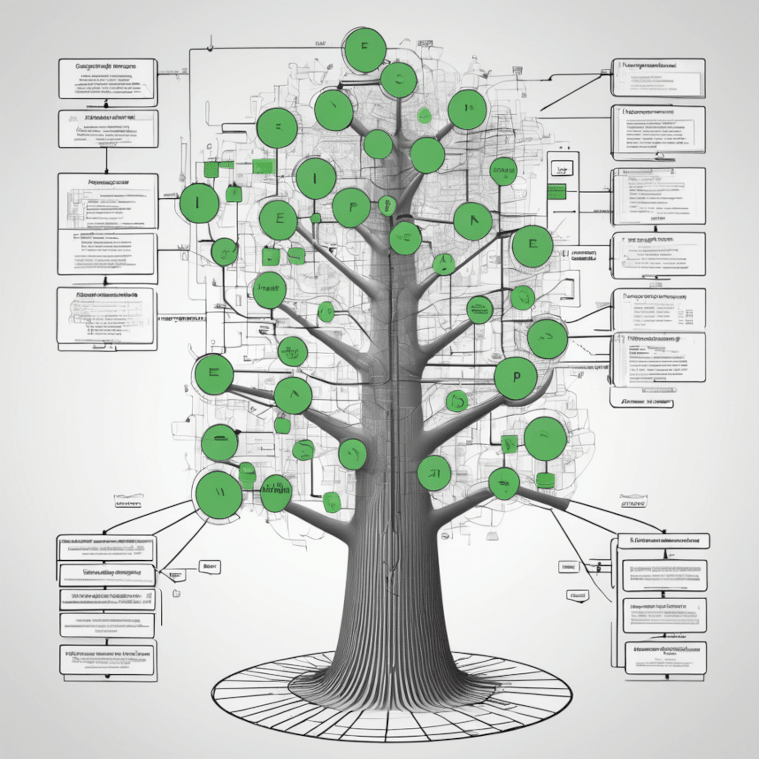
We are using a statistical approach, a method called ‘Monte-Carlo tree search neural networks’.
Reaching an optimum design involves making a series of decisions. Each decision splits the trunk of your design into branches. Many sequential decisions build a tree. We can then algorithmically search for the optimum fusion plant design based on all the trade-offs. Computers use similar algorithms to play chess.
Despite being an established methodology increasingly adopted in engineering, Nikola points out a uniqueness in this work:
One of the biggest challenges of this task is that it has never been done before. We are creating a completely novel tool for fusion engineering.
If the RACE research team achieve this, it could create a fundamental tool. A tool used for all fusion machine designs going forward.
Nikola marvels:
I presented this work at SOFE 2023 and was amazed at the amount of interest shown. It made me realise that people are aware of these tools, of what novel machine learning techniques offer, and they are exploring ways to apply them to fusion problems. The next 3 to 5 years are, I believe, very promising for the future of fusion. The field of AI is growing exponentially, and I can see the work that we are doing will move from proof of concept to working solution. Soon our tool will be actively helping engineers in the early designs.
Written by Virginia Russell, RACE Knowledge Transfer Manager
An extra read: “Advancing Methods for Fusion Neutronics: An Overview of Workflows and Nuclear Analysis Activities at UKAEA”
https://www.tandfonline.com/doi/full/10.1080/15361055.2022.2141528