The journey to Moscow’s Kurchatov Institute in 1969 confirmed the impressive results of the Soviet T3 experiment – a relatively new type of fusion device known as a ‘tokamak‘. The Culham team measured plasma temperatures of around 10 million °C – far in excess of any previous fusion machine. It was a big step towards the conditions needed for fusion power. The emergence of the tokamak was a huge boost for fusion research. It opened the way to machines like JET, ITER and a viable route to future fusion power plants.
International collaboration in science is taken for granted now. However, in the late 1960s the Cold War was at its peak. Mutual suspicion between East and West made the Culham scientists’ mission an almost unprecedented breach of the ‘Iron Curtain’.
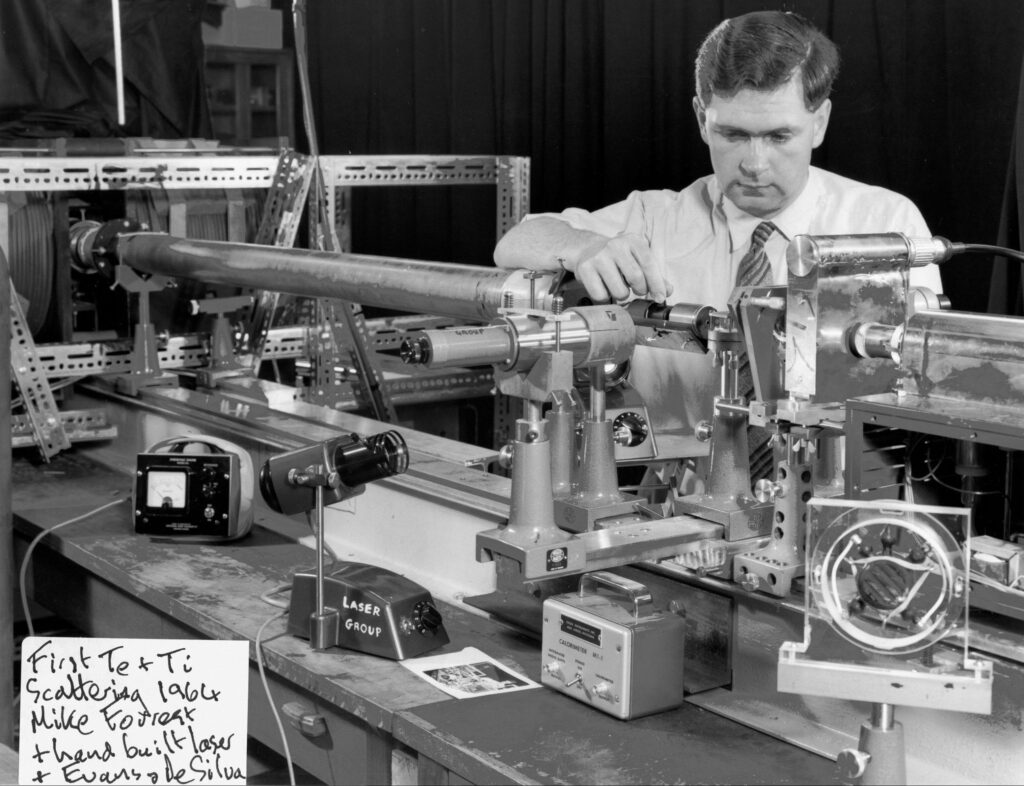
To mark the 50th anniversary of the publication of the T3 results in Nature, we spoke to Dr Mike Forrest, who was on the team that went to Moscow. Mike helped to develop the ‘Thomson scattering’ laser techniques that made the measurements possible. They are still a key diagnostic for today’s tokamaks. Mike recalls the pioneering early use of lasers, the top-level clearance needed for the trip and how UK and Soviet scientists bonded over a shared love of tea as they made a breakthrough that still resonates today.