
63rd Culham Plasma Physics Summer School
The 63rd Culham Plasma Physics Summer School is a two-week introductory programme at UKAEA’s Culham Campus. It covers fundamental plasma physics and its applications, including fusion, astrophysics and low-temperature plasmas.
The Culham Plasma Physics Summer School features:
- an introduction to the basic principles of plasma physics through lectures by experts and problem-solving sessions
- sessions on fusion plasmas, solar, space and astrophysical plasmas, laser plasmas, industrial applications, and data analysis
- tours of fusion facilities like the Joint European Torus (JET) and the Mega Amp Spherical Tokamak (MAST) Upgrade
- social events
- opportunities for networking and detailed discussions with course lecturers
The course director is Dr Michael Fitzgerald and the co-ordinator is Andrew Wise. Lecturers are from the UKAEA, the Rutherford Appleton Laboratory (RAL) together with leading European universities – all renowned experts in their fields.
Deadline for registrations: 19 June 2026 – Payment in full by 26 June 2026
Costs
| Registration | Accommodation | Total |
|---|---|---|
| £440 | £1025 | £1465 |
Bank transfer details for payment
Sort Code: 83-27-23
Account No. 00102300
IBAN No. GB54RBOS83272300102300
Swift/BIC Code: RBOSGB2L
Funding schemes
Students based in the European Union may be able to claim travel and accommodation funding for this summer school from FuseNet. Registration before the summer school is required. Visit www.fusenet.eu/funds for more details.
We may be able to waive the registration fee (£440) for a few students originating from countries with a Human Development Index (HDI) value below 0.85.
Please send a CV and a supporting statement to our course co-ordinator from your academic supervisor before 31 March. Preference will be given to students from countries with the lowest HDI and most relevant background.
We will let applicants know of the results shortly after the deadline so that they can plan their travel.
Who can attend?
The Culham Plasma Physics Summer School is aimed at Masters and early-career PhD students. Students must be over 18 and generally will be in their final year of undergraduate or first year of post graduate study. We assume no previous knowledge of the subject, but familiarity with electromagnetism and applied mathematics at first degree level will be helpful.
Events
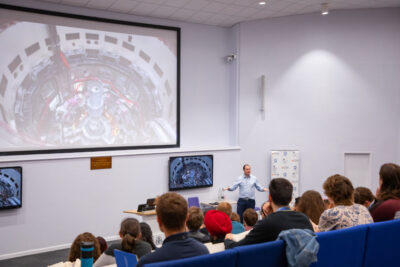
Lectures
All lectures are in the Culham lecture theatre, with the exception of those on the Tuesday of week 2, which are on the Harwell site.
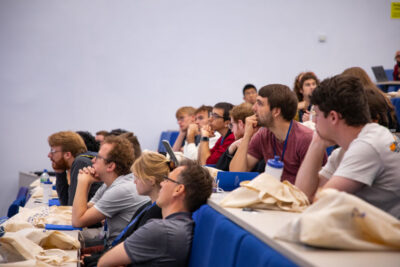
Problem sessions
Problem sessions are in the Culham lecture theatre.
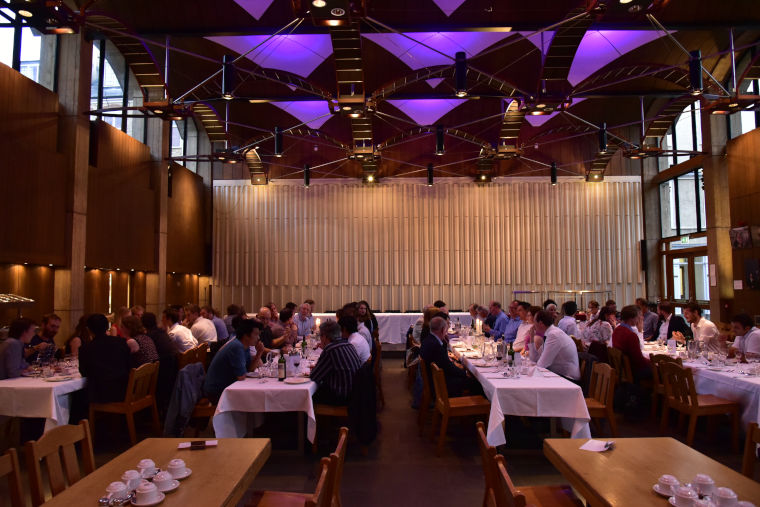
Banquet
19:00 Thursday (week 2)
St Edmund Hall Queen’s Ln, Oxford OX1 4AR
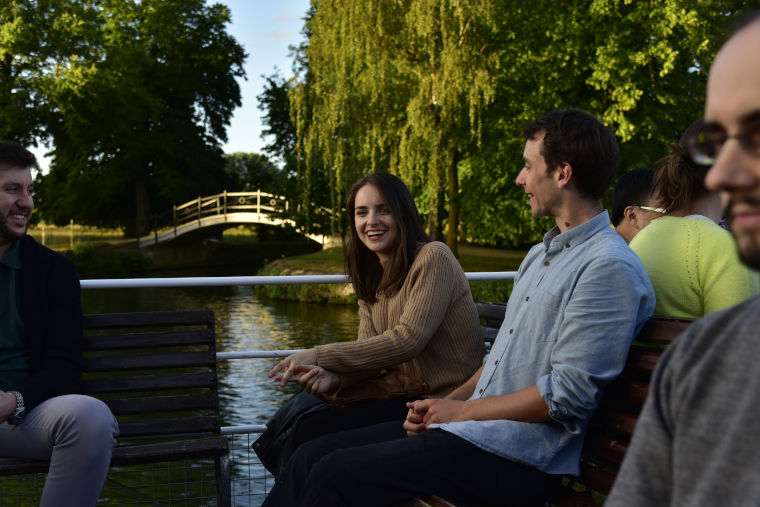
Thames boat trip
20:00 Friday (week 1)
Boat departs from Folly Bridge, Oxford, OX1 4JU
Poster session
One of the main benefits of the Culham Plasma Physics Summer School is the exchanges between the students. To facilitate this, there is an informal poster session. The main objective is to enable students who are working in related areas to meet for discussions.
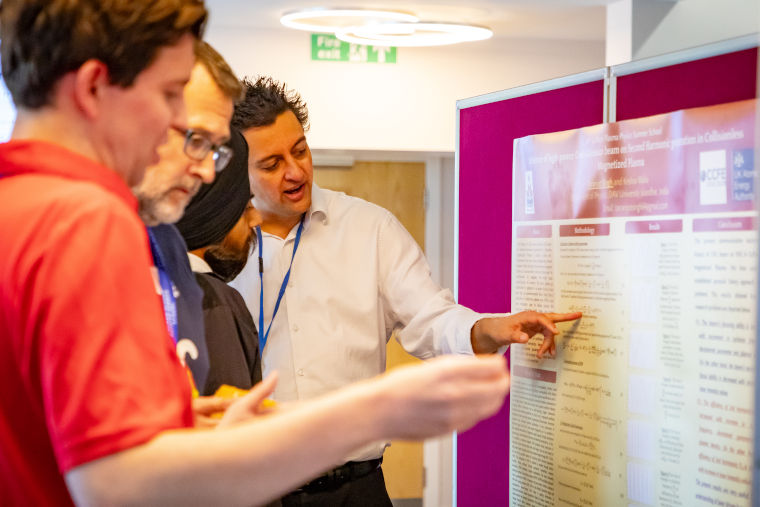
If you want to organise a poster session, there is no need to tell us the title in advance – just bring your poster along. For poster sessions you will need:
- a brief outline of the area in which you are working – there is no expectation of original work.
- a poster which fits the space 0.95 m wide and 1.2 m high – this is the only constraint for presentation
Note: It is NOT possible to print your poster at Culham Campus.
Timetable
We are working on finalising the timetable for the 63rd Culham Plasma Physics Summer School. Here is the timetable for the 62nd Culham Plasma Physics Summer School in 2025 as an example.
The 62nd Culham Plasma Physics Summer School 2025
| Lecturer | Session | Lecturer organisation |
|---|---|---|
| Dr Michael Fitzgerald | Introduction | UK Atomic Energy Authority |
| Sir Ian Chapman | Welcome | UK Atomic Energy Authority |
| Dr Mikhail Gryaznevich | History of Fusion | Tokamak Energy |
| Dr Michael Fitzgerald | Single Particle Motion | UK Atomic Energy Authority |
| Dr Ben McMillan | Plasma Kinetic Theory | The University of Warwick |
| Prof. Erik Wagenaars | Low Temperature Plasmas | University of York |
| Dr Anantanarayanan “Chippy” Thyagaraja | Classical Transport | UK Atomic Energy Authority |
| Dr Daniele Brunetti | MHD I | UK Atomic Energy Authority |
| Dr Daniele Brunetti | MHD II | UK Atomic Energy Authority |
| Dr Morten Lennholm | Tokamaks 101: What is a tokamak? | UK Atomic Energy Authority |
| Dr Ivan Konoplev | Waves in cold plasma | UK Atomic Energy Authority |
| Dr Michael Hardman | Neoclassical Transport | UK Atomic Energy Authority |
| Dr Ivor Coffey | Diagnostics | UK Atomic Energy Authority |
| Prof. Tünde Fülöp | Runaway electrons | Chalmers University of Technology |
| Dr Jakob Svensson | Connecting Theory with Experiment | Seed eScience Research |
| Dr Colin Roach | Landau Damping | UK Atomic Energy Authority |
| Dr Colin Roach | Plasma Turbulence | UK Atomic Energy Authority |
| Dr Ken McClements | Plasma Instabilities | UK Atomic Energy Authority |
| Dr Fernanda Rimini | Tokamaks 201: How to Drive a Tokamak | UK Atomic Energy Authority |
| Dr Philippe Jacquet | Heating and Current Drive | UK Atomic Energy Authority |
| Mr Joe Deane | Introduction to JET | UK Atomic Energy Authority |
| Dr Kate Lancaster | Inertial Confinement Fusion | University of York |
| Prof. Bob Bingham | Astrophysical Plasma Physics and Particle Acceleration in Plasmas | STFC (RAL), University of Strathclyde, University of St Andrews |
| Dr Stuart Mangles | Laser Wakefield Acceleration | Imperial College London |
| Dr Anantanarayanan “Chippy” Thyagaraja | Plasma Transport | UK Atomic Energy Authority |
| Dr William Morris | Tokamaks 301: Future tokamaks | UK Atomic Energy Authority |
| Dr Fulvio Militello | Plasma Wall Interaction | UK Atomic Energy Authority |
| Dr James Harrison | Introduction to MAST Upgrade | UK Atomic Energy Authority |
| Dr Fulvio Militello | Tokamak Edge Physics | UK Atomic Energy Authority |
| Prof.Dr Stefaan Poedts | Space Weather | KU LEUVEN |
| Dr Sui Ann Mao | Cosmic Magnetic Fields | Max Planck Institute for Radio Astronomy |
| Dr Michael Fitzgerald | Burning Plasma Physics | UK Atomic Energy Authority |
Accommodation
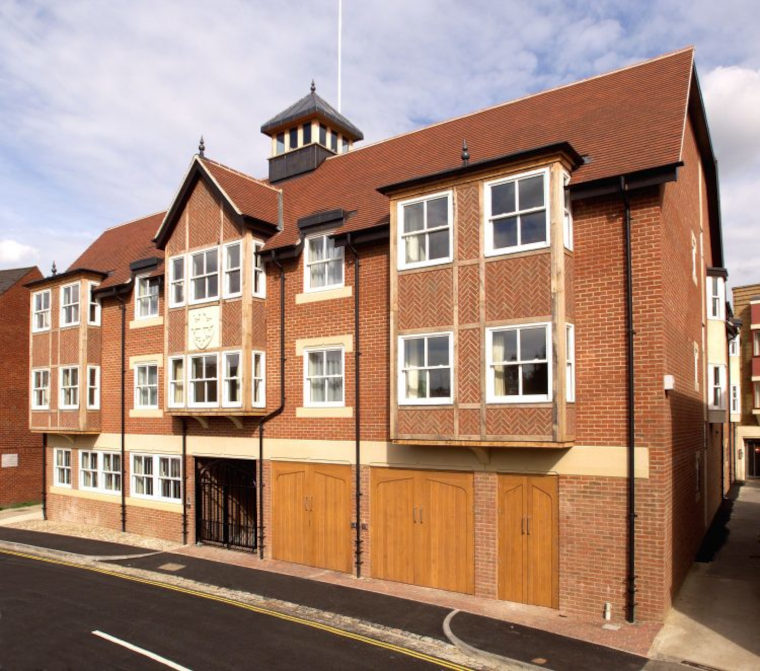
Accommodation is provided at the William R Miller building, Dawson street, Oxford. This is a modern annexe building of St Edmund Hall (situated approximately 10 minutes walk from the main college) and has 45 en-suite rooms available.
You can view the facilities on the University rooms website – but please do not book accommodation through this site. We have a block booking including a continental breakfast (served in the common room at 07:50) for the summer school.
Transport
Getting to Oxford
By road
Exit the A34 at Abingdon. Travel East, through the town and exit on the A415.
There are signs for Culham Campus / Culham Science Centre about 3 miles after crossing the river Thames.
By rail
Didcot Station is within 5 miles of Culham Campus on the main line between London Paddington and Bristol Temple Meads. Culham station is approximately 10 minutes walk from the site.
By air
Oxford Tube and Oxford Bus Company operate a frequent and inexpensive service from Heathrow and from Gatwick to Oxford.
Between Oxford and Culham Campus
Coach times
A coach will be provided for the daily return journey between Oxford and Culham Campus every weekday. Departure time is 08:30 from Oxford.
On the second Tuesday of the school, the bus will leave earlier at 08:00 for Rutherford Appleton Laboratory Harwell.
Return time varies according to timetable. Latest return at 17:00.
On the final day of the school, the return coach will also stop at the central Oxford bus station. Students need to check out of the accommodation in the morning of the final Friday (unless staying for extra days)
On arrival
Registration will take place at the provided accommodation (the William Miller building) between 16:00 and 19:00 on the Sunday ahead of the first week. Please bring photo ID to registration as we need to issue Culham Campus passes at this time.
Students accommodated elsewhere (for example, students who live locally or who have made their own arrangements), or who arrive too late to register on the Sunday, should register at the summer school desk at Culham during the coffee and lunch breaks. Those registering on site will need to collect site passes from the Culham reception on the first Monday morning of the school (photo ID required).
63rd Culham Plasma Physics Summer School event details
Date
13 July 8:00 am to 23 July 5:00 pm
Location
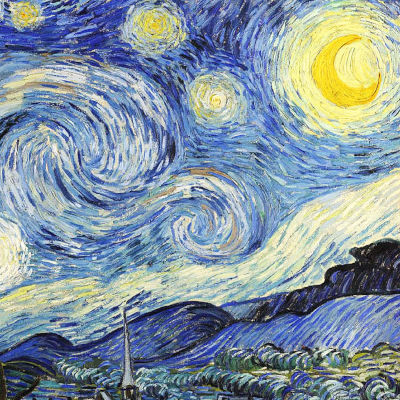
Banner image: The Starry Night (1889) by Vincent van Gogh. The pattern of light and dark in this image has been shown to closely follow the mathematical structure of turbulent flow. JL Aragón et al. Turbulent Luminance in Impassioned van Gogh Paintings J Math Imaging Vis (2008) 30: 275–283.
Image credit: MOMA, The Museum of Modern Art.