In the last decade
An overview of UKAEA’s key achievements in the last decade.
March 2025
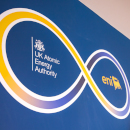
The partnership between UKAEA and Eni S.p.A launched to work on the world’s largest and most advanced tritium fuel cycle facility in the UK.
November 2024
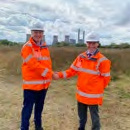
UKIFS Ltd is stood up as a subsidiary company of UKAEA to deliver the STEP Fusion programme and stimulate growth of a UK fusion energy industry.
December 2023
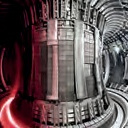
The Joint European Torus (JET) runs its last pulse, having achieved a world record in October, and starts repurposing and decommissioning.
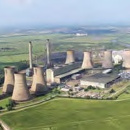
October 2022
West Burton site announced as the future home of STEP. It will create thousands of highly skilled jobs in the area and attract high-tech industries.
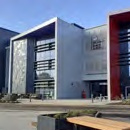
June 2022
Tritium research centre (H3AT) opens at Culham to lead the delivery of tritium
lifecycle solutions and technology both in fusion and adjacent sectors.
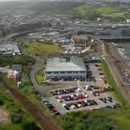
April 2022
RAICo Programme Collaboration starts to use robotics and AI in nuclear decommissioning environments.
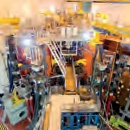
May 2021
A second JET campaign begins, using the fuel mixture of deuterium and tritium.

October 2020
The Fusion Technology Facility (FTF) in South Yorkshire opens, our first new research site outside of Culham since the 1950s, bringing highly skilled jobs, fostering collaborations with research organisations and engaging industry.
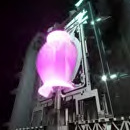
MAST Upgrade starts operation with the engineering team achieving the Royal Academy Major Project Award. The upgrade enabled longer pulses, increased heating power and a stronger magnetic field – and an innovative new plasma exhaust system.
October 2019
The conceptual design phase for STEP, a prototype fusion power plant, begins.
The Oxfordshire Advanced Skills (OAS) centre opens on Culham Campus aiming to train up to 350 apprentices each year.
May 2016
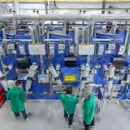
The Materials Research Facility (MRF) opens, enabling industrial and academic researchers to analyse the effects of irradiation on materials as part of the National Nuclear User Facility (NNUF) initiative.
August 2014
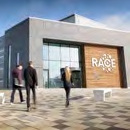
The RACE centre of excellence opened with the building following in 2016. RACE collaborates internationally to design, operate and deliver robotics for extreme industrial environments.
UKAEA: 1940s to 1990s
Some UKAEA milestones from 1940s to 1990s.
1991: JET achieves controlled fusion
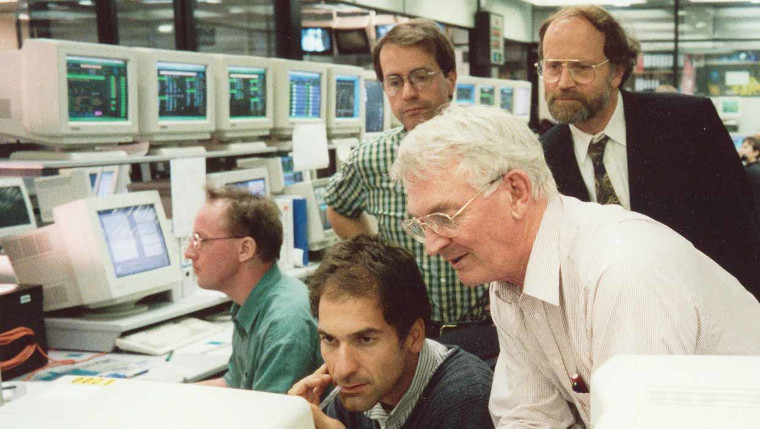
JET made headlines around the globe in 1991 when it became the first machine to achieve controlled fusion. It went on to set a world record for power produced from a fusion plasma – 16 megawatts – in 1997. Since then it has continued to refine the tokamak concept, preparing the way for its larger international successor, ITER.
1990s onwards: Leading the development of the spherical tokamak
JET sets 1st world records and the Culham laboratory operates the first full-sized spherical tokamak, START, followed by MAST.
From the 1990s onwards, UKAEA has led the development of the ‘spherical tokamak’. This is a more compact tokamak design with excellent potential for smaller, cheaper fusion devices. Culham built the first large spherical tokamak – START – in 1991. This was followed by the more advanced MAST machine in 2000. We continue to lead the way in spherical tokamak research, with MAST Upgrade.
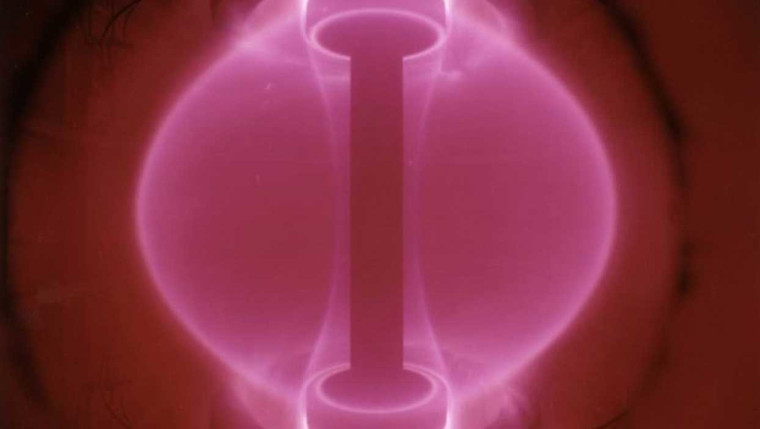
1973 to 1983: The progress to the Joint European Torus (JET) and its first plasma
The worldwide oil crisis of 1973 prompted governments to step up research into alternative forms of energy, including fusion. That same year, the European Economic Community’s atomic energy agency, Euratom, began an ambitious project to design a large multinational tokamak. Their aim was an experiment that would get close to reactor conditions and show that fusion could produce significant quantities of power. The machine came to be known as JET – the Joint European Torus. Culham was chosen to host JET in 1977 and the ‘first plasma’ was produced on 25 June 1983.
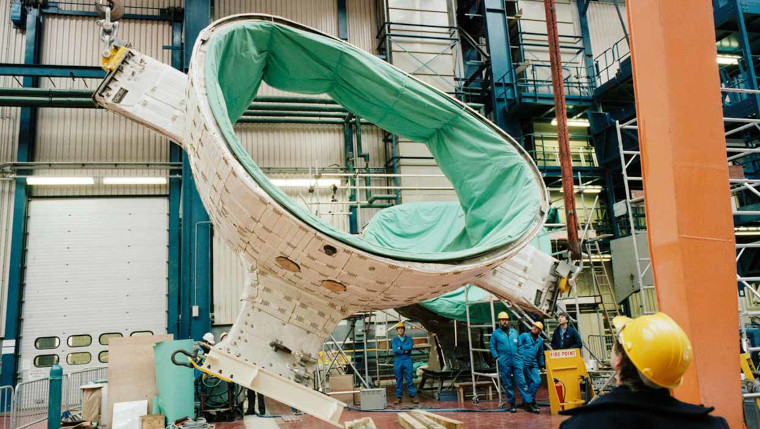
1969: The focus on the tokamak
In 1969, Culham scientists travelled to Moscow to verify the results of the pioneering Russian T3 tokamak device. They confirmed T3’s success in achieving plasma temperatures over 10 million degrees C – far superior to any previous experiment. This indicated that the tokamak offered the best route to fusion power, and from the early 1970s most research at Culham focused on this design.

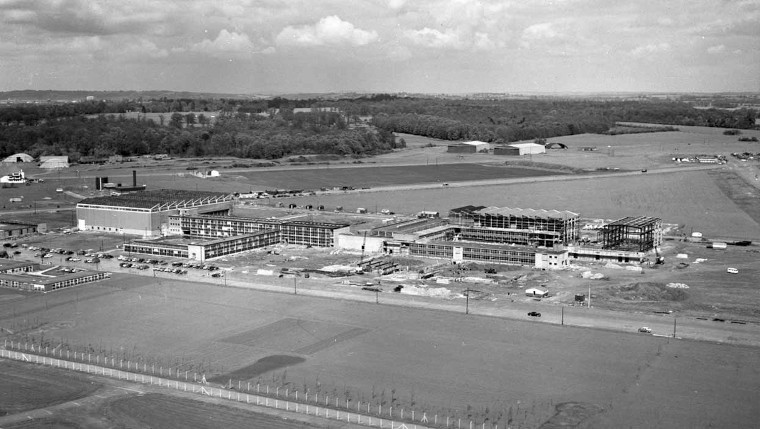
1965: UKAEA opens Culham Laboratory
The UK Atomic Energy Authority created Culham Laboratory as a purpose-built home for Britain’s fusion research programme. Officially opened in 1965, it was constructed on the site of a former airfield, Royal Naval Air Station Culham. The laboratory soon established a leading reputation for fusion science. By 1983, Culham had built over 30 different experiments – more than one per year – testing a variety of machine concepts.
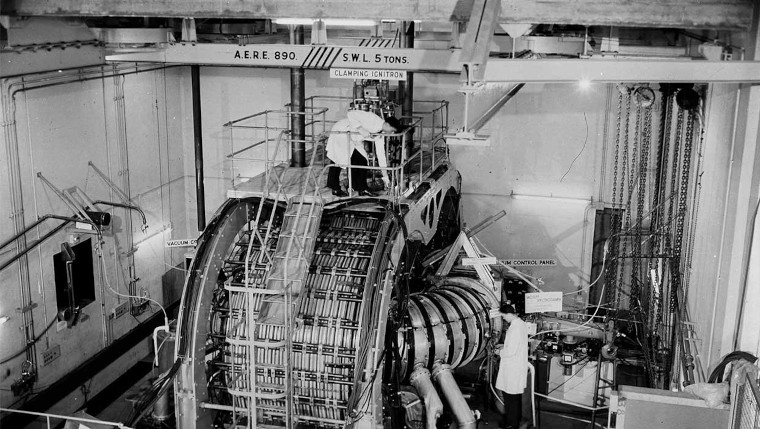
1940s and 1950s: Fusion research begins in the UK
Researchers start looking at possibilities of replicating the process of fusion on
Earth. The UKAEA starts the ZETA experiment in 1957.
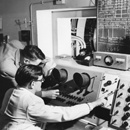
Fusion research in the UK started in earnest in the UK in the later 1940s / 1950s – with work being undertaken at Aldermaston, various universities including Imperial College London and Oxford and the newly formed Atomic Energy Research Establishment at Harwell. Zero Energy Thermonuclear Assembly (or ZETA) at Harwell was the most prominent experiment in this period.
Historical context
An overview of some key milestones in the history of the research and development of fusion energy.

1920s
Arthur Eddington suggests that stars draw their energy from the fusion of hydrogen into helium.
1930s
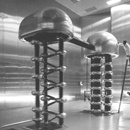
Rutherford and Oliphant at the University of Cambridge show the fusion of deuterium into helium and observe that “an enormous effect was produced”.
1940s to 1950s
Researchers start looking at possibilities of replicating the
process of fusion on Earth. UKAEA starts the ZETA experiment in 1957.
1960s
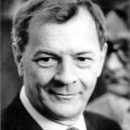
Culham Laboratory in Oxfordshire opens. Lev Artsimovich from the USSR presents results at the 1965 IAEA conference at Culham describing encouraging results from a device called a ‘tokamak’. Many magnetic confinement fusion devices are now based on this design.
1970s to 1980s
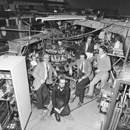
Small tokamak devices were then built at Culham such as TOSCA. European countries came together to design and
build JET at Culham.
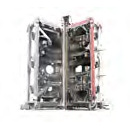
1990s
JET sets 1st world records and the Culham laboratory operates the first full-sized spherical tokamak, START,
followed by MAST.
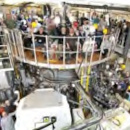
2000s
Several privately backed fusion companies launch.
Watch the history of fusion research and Culham
Learn about the history of fusion energy and the Culham Science Centre in this webinar recording.
Star Makers 2: JET’s quest for fusion energy
Star Makers 2
The story of the Joint European Torus – JET’s quest for fusion energy.